
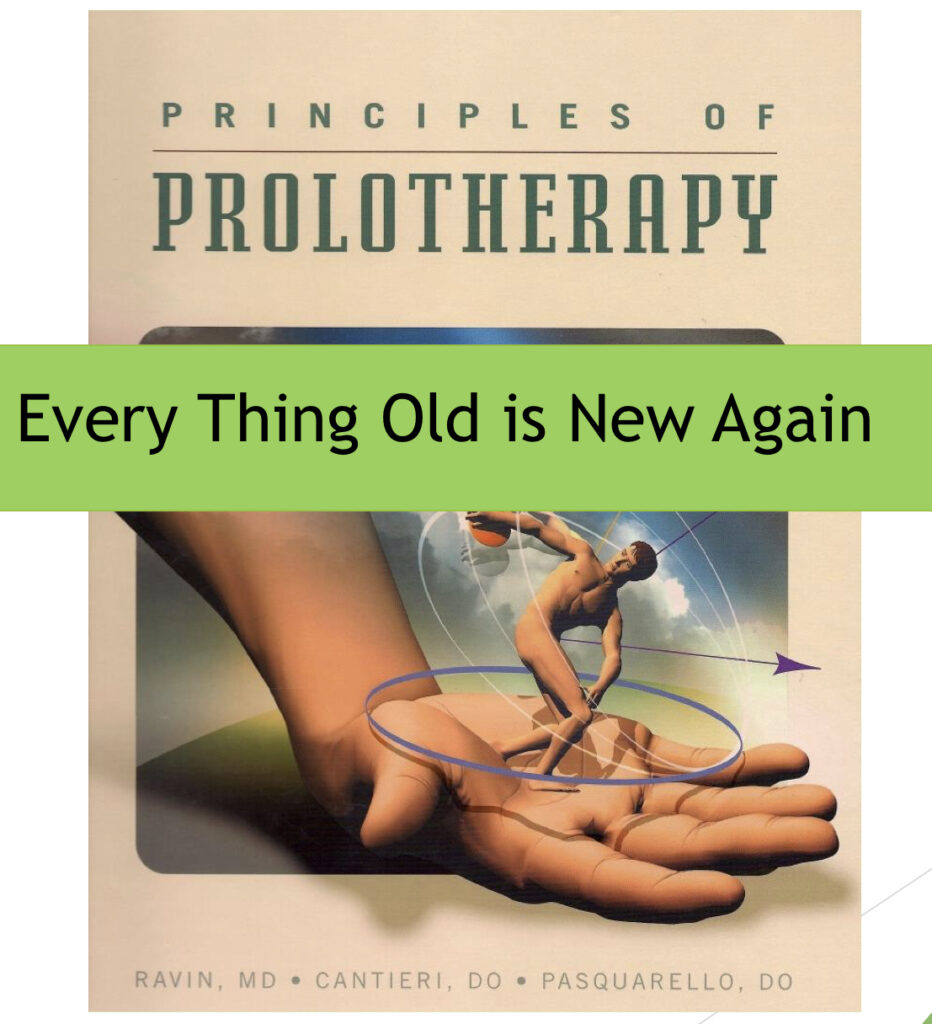
Prolotherapy, which belongs to regenerative injection techniques (Regenerative Injection Therapy, RIT), was pioneered in the 50s by George S. Hackett, MD as a treatment for ligamentous joint relaxation.
What is Prolotherapy?
• Non-surgical, non-opioid or steroid medication technique
• It involves injecting medicinal substances into tissues that have been damaged or loosened (muscle, ligament, tendon, cartilage).
• Causes proliferation and repair – tissue thickening.
• Reduces pain and improves functionality.
• It is a safe technique (infusion therapy and not surgical therapy).
• Simple and low cost in relation to its effectiveness.
• Gentle and friendly technique that stimulates the healing process.
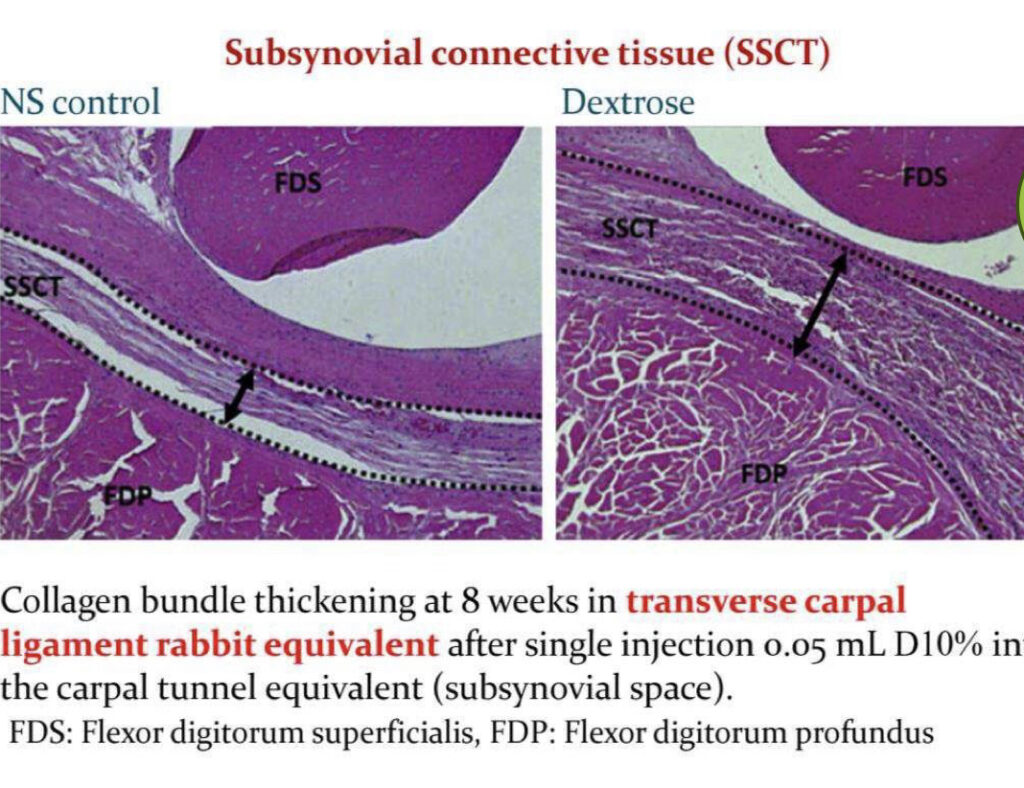
Based on experimental models, Prolotherapy causes an increase in connective tissue thickness by inducing an inflammatory reaction with mobilization of lymphocytes, fibroblasts, macrophages and leukocytes that stimulates anaplastic processes – tissue mechanisms.
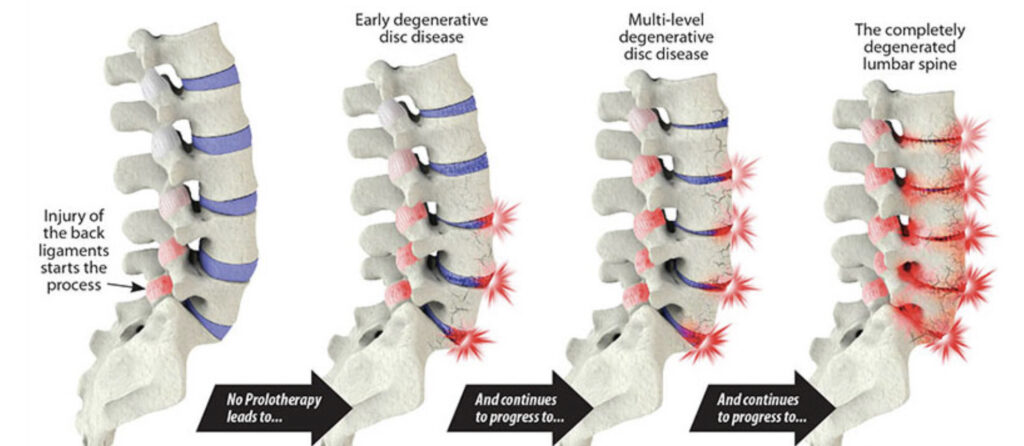
Many pain syndromes in which the symptoms return on a chronic basis have as a cause of initiation or progression the laxity of ligaments.The loosening of the ligaments causes pain not only locally but also in places far from them ( referred pain). Symptoms are often attributed to other causes or remain undiagnosed as the diagnostic approach focuses on static radiographic findings, resulting in wrong treatments and unnecessary surgeries, with pain remaining or increasing afterward, which is not uncommon , such as for example in spinal procedures. In fact, the birth and development of lessions such as disc herniations, spondylolisthesis, but also bony, discic and joint inflammations and osteophytic changes, is closely related to ligament laxity.
Symptoms caused by spinal instability
• The situation is gradually worsening.
• Difficulty with an unsupported seat and better with a supported back.
• Frequent attacks or episodes of symptoms (recurrence, not first episode).
• Frequent episodes of muscle spasms.
• Feeling unsteady.
• Greater pain when returning to a standing position from bending over.
• History of painful grasping or blocking during trunk movements.
• Inability to “hold” a stable position of the spine.
• Long-term, chronic disorder.
• Frequent back stretching is needed to reduce symptoms.
• Pain increases with sudden, insignificant or mild movements.
• Cyclical symptoms, different symptoms on different days.
• Temporary relief with a back support or corset.
• Worse with fixed postures or decreased likelihood of reported static position that is not painful.
The effectiveness of Prolotherapy is based on restoring the stability of the joints and spine by strengthening the ligaments. Conditions such as chronic lower back pain, cervical syndrome, joint pain, various gluteal syndromes are largely reduced with Prolotherapy which, in combination with appropriate nerve blocks, quickly reduces pain levels and improves functionality. It can not overcome of course bad posture, poor diet or a harmful lifestyle. If a person is constantly in a state of sleep deprivation, constant stress and fatigue, a poor nutritional diet with a bad attitude of working long hours, no number of prolotherapy sessions will cure him. Correcting the above factors will contribute and allow Prolotherapy to achieve optimal results.
Prolotherapy sessions include cartographically targeted, ultrasound-guided infusions for maximum precision and safety, under the cover of appropriate nerve blocks for their painless as possible application, and minimization of the initial worsening of symptoms that occurs in up to 20% of patients from the induced inflammatory process, due to the inability to use anti-inflammatory drugs (Steroids should not be administered at least 20 days before and after, and Non-steroidal anti-inflammatory drugs not continuously for more than 48 hours, before and after). The latter though makes prolotherapy particularly suitable for patients with diabetes.
3-6 sessions are applied at intervals of 2-6 weeks. The improvement is evident from the first sessions.

