
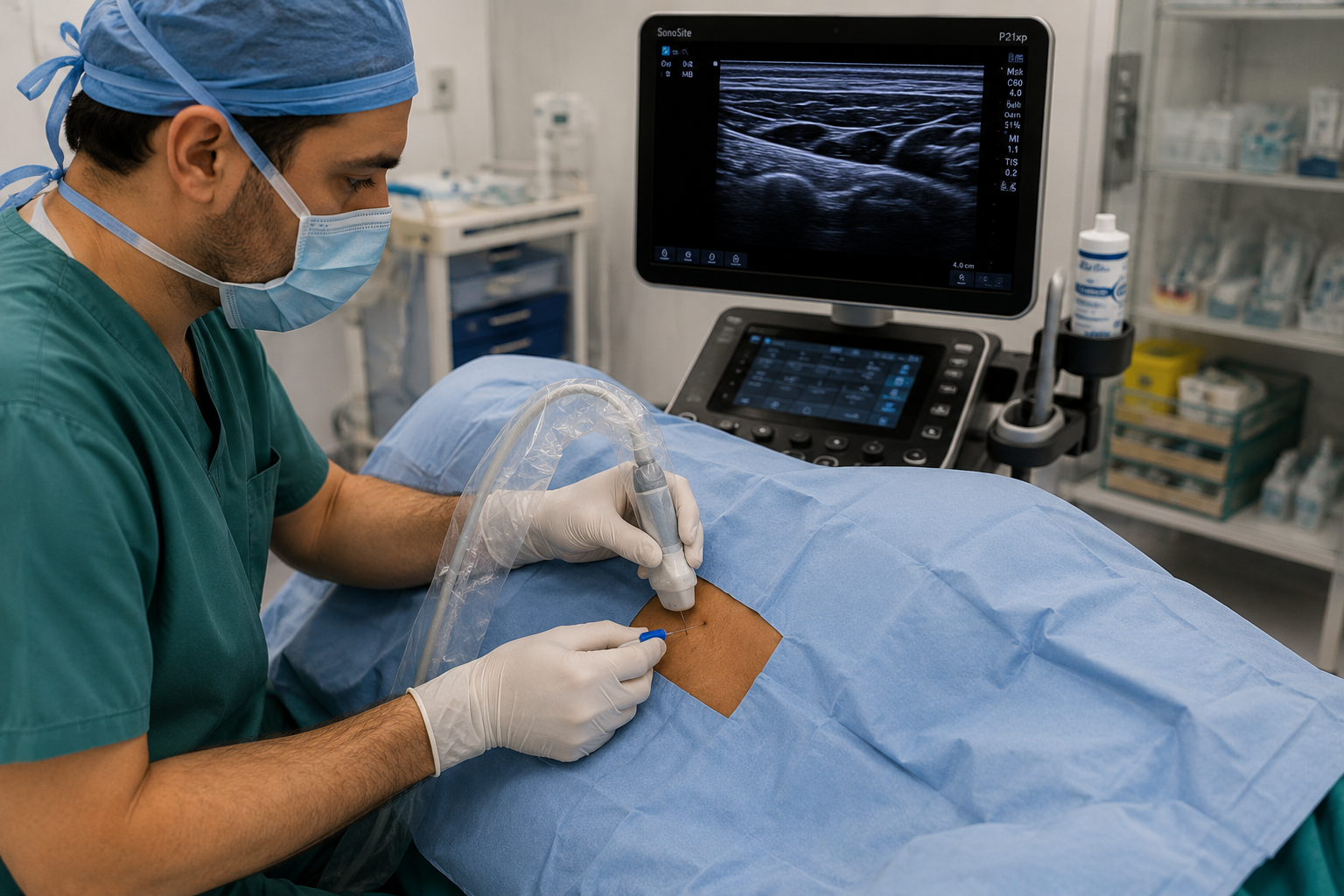
Epidural steroid injection (ESI) is an invasive treatment used primarily for pain resulting from irritation or inflammation of nerve roots in the spine. It does not “fix” the underlying cause (e.g., a herniated disc), but it can reduce inflammation and relieve pain to facilitate recovery.
Main indications
It is mainly used for:
• Low back pain with sciatica (pain that radiates down the leg)
• Neck pain with arm pain (pain that radiates down the arm)
• Herniated intervertebral disc
• Spinal stenosis
• Rhizopathy from degenerative changes
• Pain after spinal surgery (in selected cases)
It usually has the best results when there is:
• clear radicular pain (“neural” pain),
• MRI finding that matches the symptoms,
• relatively recent onset of symptoms.
It is not as effective for:
• non-specific chronic low back pain without nerve compression,
• purely muscular pain,
• generalized chronic pain.
How effective is it?
Effectiveness depends on the cause of the pain.
For herniated disc/acute radiculopathy
The best evidence of effectiveness is for sciatica from herniated disc:
• many patients have significant pain relief for weeks to months,
• may delay or avoid surgery in some,
• improvement is mostly short to medium term.
For spinal stenosis
Results are usually more modest:
• may help temporarily,
• duration of relief is often shorter.
For chronic non-specific low back pain
The evidence is weaker:
• benefit is often limited or transient.
What do the studies say?
Most systematic reviews show that:
• there is modest short-term relief of radicular pain,
• long-term superiority (>6–12 months) is less clear,
• function often improves along with pain, but not always dramatically.
Treatment usually works best when combined with:
• physical therapy,
• exercise,
• weight loss where needed,
• activity modification.
How long does the effect last?
High variability:
• a few days to a few months,
• some patients have no substantial benefit,
• others have significant relief for a long time.
Often given:
• 1–3 injections in total,
• not repeated without clear benefit
Risks and side effects
Most complications are mild and transient:
• temporary increase in pain,
• headache,
• numbness,
• flushing,
• increased blood sugar.
More rarely, serious complications may occur:
• infection,
• hematoma,
• nerve damage,
• vascular episode,
• paralysis.
Therefore, usually:
• multiple repetitions are avoided,
• fluoroscopy or ultrasound guidance is used,
• and careful patient selection is performed.
Overall
Epidural steroid injection:
• has the greatest value in sciatica/radiculopathy from herniated disc or stenosis, especially for short-term relief,
• but is not considered a treatment with a stable long-term effect for chronic low back pain in general.
Effectiveness depends greatly on:
• correct diagnosis,
• whether there is actual nerve root inflammation,
• duration of symptoms,
• and overall rehabilitation (exercise, physical therapy, ergonomics, etc.).
